
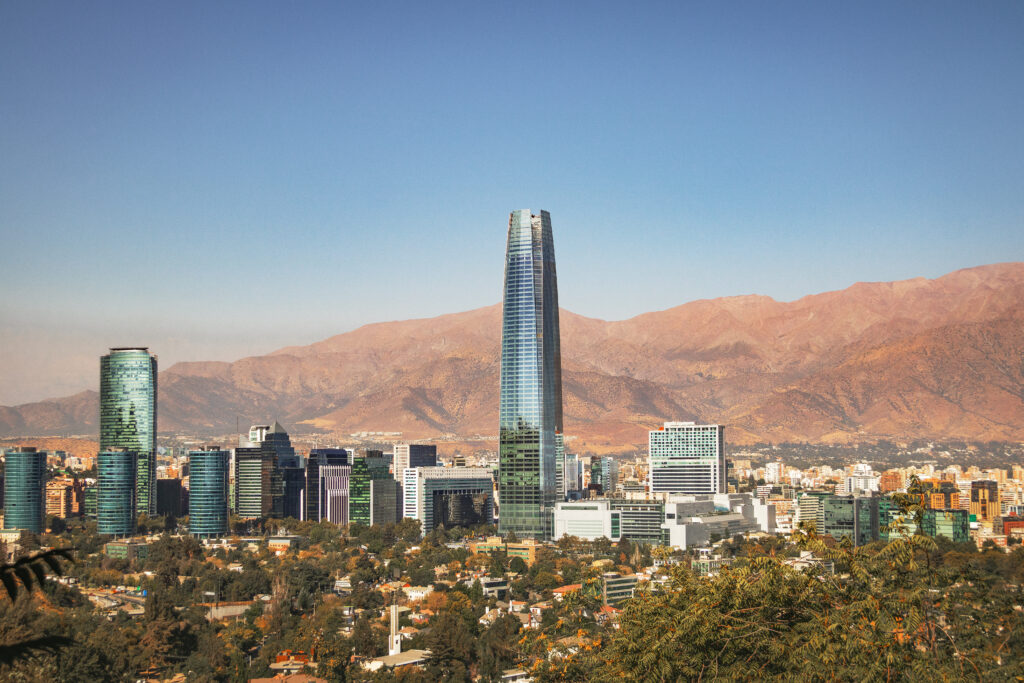
Chile, often seen as one of South America’s most stable and competitive economies, boasts a dynamic business environment rooted in innovation, transparency, and global integration. With key sectors like mining, energy, agriculture, and financial services driving growth, Chile has become a regional leader in economic development and trade. Its openness to international markets—supported by an extensive network of free trade agreements—has made it an attractive destination for foreign investment and a gateway to the Pacific. Understanding the market context helps frame how Chilean executives lead.
Hogan Assessments has personality data for employees and leaders around the world. Our benchmark of nearly 1,000 executives in Chile spans a range of industries. By analyzing the data of those in leadership roles, we can identify the characteristics most valued within Chilean organizations, revealing how companies define and reward leadership.
We collaborated with GET Latam, an authorized Hogan distributor in Chile, to uncover practical insights from their work with Chilean executives across the country. By examining how these leaders build relationships, drive performance, and find purpose, we aim to better understand what makes leadership in Chile unique, as well as what it means for organizations navigating this fast-evolving market.
What Do Chilean Leaders Want?
Hogan’s Motives, Values, Preferences Inventory (MVPI) measures the core goals, values, drivers, and interests that determine what people desire and strive to attain. This assessment helps to understand the inside of personality, or an individual’s drivers and motivators.
Tradition
On the MVPI, Chilean executives highest scale is Tradition. In fact, Chilean leaders score 16 percentile points above the global benchmark of executives. Leaders who score high on Tradition value history and convention. These individuals likely have a high standard of conduct and well-established principles that drive their decision-making and behavior. Individuals are perceived as mature and full of common sense. They value rules, established procedure, and formality and care about maintaining tradition, customs, and socially acceptable behaviors. They typically believe there is a right and wrong way to do things and encourage structured approaches to completing projects and tasks.
Aesthetics
Interestingly, Chilean leaders’ lowest scoring motivator is Aesthetics, nine percentile points below the benchmark of executives. Those who score high on Aesthetics tend to enjoy beauty and art and be focused on a product’s quality, image, and “look and feel.” On the low side, like Chilean executives, leaders tend to be functional and practical. They value substance over form. They tend to be down-to-earth and likely create organizational cultures focused on reality, practicality, and common sense.
In combination, Chilean leaders value stability, consistency, and adherence to established norms and practices, respecting historical precedents and following a strong moral code. They are likely to create a work environment that values order, predictability, and respect for authority. On the other hand, their low Aesthetics score suggests they may not prioritize creativity, innovation, or the aesthetic aspects of their work environment. They are practical and businesslike, focusing on functionality and efficiency over artistic or imaginative pursuits. This leader may excel in roles that require maintaining established systems and processes but might struggle in situations that demand creative problem-solving or a focus on design and aesthetics.
According to María José Goycoolea, CEO and founder of GET Latam, integrity and quality trump all other pursuits of organizations and leaders, including artistic or imaginative pursuits. Chilean executives have a focus on being correct and achieving results; leaders speak honestly and do not oversell. Traditional leaders and organizations in Chile may have specific dress codes and expect people to adhere to conventions of the organization. Along with that, typical Chilean organizations favor leaders who are less disruptive, so innovation is executed in a structured way and is driven from the top down. Leaders act with formality, holding meetings and working with committees to get people on board with key initiatives.
Despite increasing gender diversity in leadership in Chile, women are still underrepresented in executive positions within the country’s organizations. Goycoolea works to close the gap through networks and initiatives, but traditional perceptions still persist. She explains that this is an area of opportunity within the country and its organizations.
How Will Chilean Leaders Get What They Want?
The Hogan Personality Inventory (HPI) measures how we relate to others when we are at our best. It provides valuable insight into how people work, how they lead, and how they achieve success. Chilean executives’ two highest scoring bright-side scales are Adjustment and Ambition.
Adjustment
Chilean leaders score 11 percentile points higher than the global benchmark of executives on Adjustment, coming across as resilient, optimistic, and overall composed. Those who score high on Adjustment appear self-confident, self-accepting, and stable under pressure. They likely adjust well to new and different environments and heavy workloads. They stay calm under pressure, avoid overreacting, and manage stressors well. However, because these leaders are naturally calm and collected, they may not realize when their subordinates are dealing with stress or when a problem needs urgent attention. Accordingly, they may appear to lack vigor or empathy, and they may be seen as less responsive to feedback.
Ambition
Chilean leaders’ other highest scoring scale is Ambition. Leaders who score high on Ambition tend to be self-confident, leaderlike, driven, energetic, and competitive. They’re able to raise their hand confidently, and they work hard to achieve the big goals they set. However, these leaders could also come across as intimidating, overly self-confident, and unwilling to listen to feedback.
Prudence
Finally, compared to the global benchmark of executives, Chilean leaders score high on Prudence, 12 percentile points higher. Leaders who score high on Prudence tend to be organized, process-oriented, and compliant with rules and procedures. These leaders are likely focused on implementation and compliance; however, they may come across as rigid, inflexible, and lacking imagination.
Chilean executives therefore likely come across as calm and composed under pressure, demonstrating resilience and emotional stability, which foster a supportive and stable environment for their team. Their high Ambition drives them to set high goals and expectations, both for themselves and their team, ensuring a focus on achievement and continuous improvement. They are proactive and results-oriented, often taking the initiative to lead projects and motivate others towards shared objectives. Additionally, their high Prudence indicates a conscientious and methodical approach to decision-making, ensuring that they are thorough, reliable, and adhering to rules and procedures. This combination of traits makes them not only a dependable and trustworthy leader but also capable of inspiring confidence and driving organizational success through careful planning and execution.
Goycoolea reiterates personality insights found in the Hogan data: Chilean leaders have a strong focus on results, great self-discipline, and deep resilience. This makes Chilean executives skilled at trying new things. Even if leaders are not naturally flexible, they will always get back up, try again, and create a new plan for success. According to Goycoolea, this is why Chile has been a test market for new innovations, such as the cell phone.
With a focus on Prudence, rules matter to leaders in Chile. This emphasis on rules, processes, and order helps to keep the Chilean market stable, which leads to foreign investment and multi-national organizations working in Chile. According to Goycoolea, high Tradition and high Prudence go hand-in-hand for Chilean executives.
What Will Get in Chilean Leaders’ Way?
Finally, Chilean executives demonstrate an interesting finding on the Hogan Development Survey (HDS). The HDS measures overused strengths that emerge during increased strain, pressure, or boredom. If not managed, these qualities can damage one’s reputation and relationships, derailing one’s career and success.
Colorful
Chilean leaders’ highest scoring derailer is Colorful; however, their score is on par with the global benchmark of executives. Leaders who score high on Colorful often thrive in the spotlight, using energy and expressiveness to engage others. They come across as outgoing and socially skilled. However, when overused, this can become attention-seeking or overly dramatic, potentially overshadowing others or distracting from team goals. These leaders may not listen effectively or share recognition with others.
Bold
Chilean executives’ second highest scoring derailer is Bold, scoring three percentile points above the global benchmark. At their best, high Bold leaders exude confidence and self-belief, but when they stop self-monitoring, they may come across as arrogant, dismissive of feedback, or prone to overestimating their abilities, especially when they lack the self-awareness to identify unconscious biases. Additionally, they may create an organizational or team culture of intimidation, where subordinates feel unsafe to speak up or to challenge the status quo.
Mischievous
On the other end of the spectrum, Chilean leaders score low on Mischievous, 13 points lower than the global benchmark of executives. Leaders who score high on Mischievous tend to be risk-taking, limit-testing, and manipulative. Chilean leaders by contrast tend to be cautious, compliant, and respectful of rules—attributes that foster stability and reliability. However, this can limit their willingness to challenge the status quo, take calculated risks, or influence others through daring, disruptive thinking.
In combination, these patterns suggest a leadership profile that is engaging and confident, who thrives in the spotlight and is driven by a strong sense of self-assurance. A Chilean executive may be adept at capturing attention and presenting ideas with enthusiasm, often becoming the center of attention in group settings. Their high Bold means they are fearless and self-promoting, often setting ambitious goals and pursuing them with vigor. However, their low Mischievous score suggests they are less likely to take unnecessary risks or manipulate situations for personal gain, preferring to adhere to rules and maintain a straightforward approach. This combination makes them appear charismatic and assertive, yet trustworthy and reliable, as they are reluctant to exploit others or circumvent rules for personal advantage.
In Chile, organizational politics are common, and the leaders who are high Colorful and high Bold tend to rise to the top. Successfully networking, exuding confidence, and seeking status all help leaders to get ahead in Chile. According to Goycoolea, a leader needs to show up and be seen everywhere to get ahead. However, she also said they should show integrity, not deception, which matches the low Mischievous score.
What Can We Learn About Chilean Leaders?
In sum, Chilean executives present a profile of confident, disciplined, and highly motivated leaders who value structure and results. With high Adjustment, Ambition, and Prudence, they are seen as resilient, driven, and dependable, resilient under pressure and delivering on high expectations. Their values reinforce this: high Tradition reflects a preference for order, duty, and stability, while low Aesthetics suggests a practical, no-nonsense approach to decision-making. At the same time, their high Colorful and Bold tendencies make them engaging and assertive but may occasionally lead to overconfidence or a need for visibility. With the pairing of low Mischievous and high Tradition, the profile of Chilean executives leans toward rule-following and caution, which can limit adaptability in rapidly changing environments.
Drawing on her real-world observations, Goycoolea reflects on her experience coaching. When leaders move from middle management to executive positions, it’s important for them to stop controlling and start delegating. To avoid risk and maintain stability, the leader may desire more control but must actually practice more delegation. Additionally, more recent trends reveal an evolution to a more horizontal leadership perspective. Together, these patterns paint a picture of leaders who are poised, commanding, and reliable but who may benefit from cultivating more openness to feedback, risk, and innovation to navigate Chile’s evolving business landscape.