
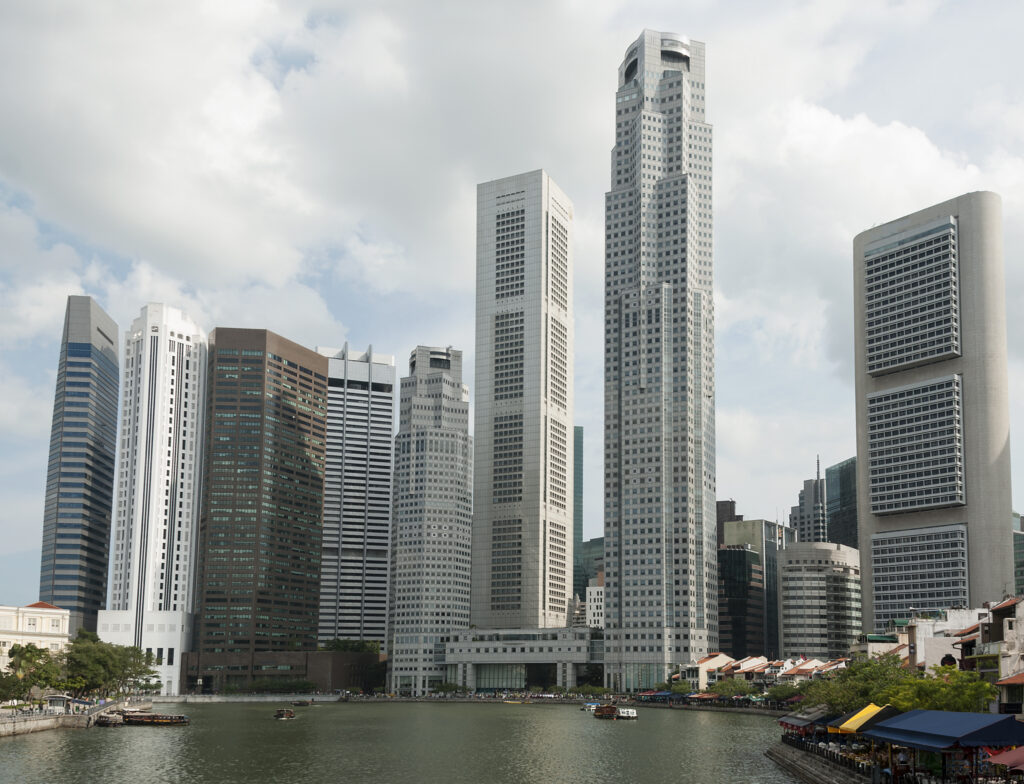
Singapore, a small island with big influence, opens an economic gateway to Southeast Asia for countries across the world. Singapore supports a high-income economy built on a business-friendly regulatory environment, which makes it appealing for overseas expansion.1 Since gaining its independence in 1965, Singapore stands as a success story of rapid development, high GPD growth, and an increased overall quality of living for its citizens.1
As companies across the world look to expand to Singapore, what types of people might they be doing business with? What are key characteristics of the people who are leading Singaporean organizations? In addition to leveraging Hogan’s benchmark of more than 650 Singaporean executives spanning industries and executive roles, we spoke with Wan Leng Ho, CEO at Optimal Consulting, an authorized Hogan distributor in Singapore, for her perspective on the market.
With these data and insights, we can discover more about Singaporean leaders today: their values, approaches to life and work, potential hindrances to their success, and key takeaways for global organizations moving into the Singaporean market.
What Do Singaporean Leaders Want?
Hogan’s Motives, Values, Preferences Inventory (MVPI) reveals that Singaporean leaders place a strong emphasis on two key motivators: Power and Commerce.
Power and Commerce
Singaporean executive leaders’ high score on the Power scale reveals a desire for influence and authority. These leaders may prefer working in and creating organizational cultures that reward results and successful competition. They also score especially high on Commerce, which highlights their focus on achieving business success and economic growth. These top leaders likely prefer working in results- and business-oriented organizations and ensure their organizations are thriving within the economy of Singapore.
Security and Affiliation
Compared to Hogan’s global benchmark of executives, Singaporean leaders place a higher value on Security and a lesser emphasis on Affiliation. Singaporean leaders score six percentiles higher on the value of Security, placing a higher value on certainty, predictability, and risk-free environments compared to other executives. Living in one of the safest countries in the world,2 these leaders may care deeply about safety, financial security, and job security.
Conversely, Singaporean leaders score eight percentile points lower than the global benchmark on the scale of Affiliation. Singaporean leaders are likely perceived as approachable and friendly, but working and socializing with colleagues does not provide a primary driver for these leaders. They prefer interpersonal privacy, autonomous work, and minimal interruptions. Business, market, and task-related pressures supersede relationships when it comes to motivation.
How Will Leaders in Singapore Get What They Want?
The Hogan Personality Inventory (HPI) assesses how individuals relate to others when they are at their best.
Ambition
Singaporean leaders typically score moderate on Ambition. Moderate Ambition reflects individuals who are viewed as both ambitious and leaderlike as well as good team players. These leaders most likely don’t mind moving into positions of authority but may not be overly strategic in their decision-making or organizational politicking. Compared to the global benchmark of executives, Singaporean executives score six percentile points lower, likely demonstrating more supportive behaviors and setting attainable realistic goals. Recent commentary on Singaporean leaders asks the question: Are Singaporean leaders losing their competitive edge by staying within their comfort zones?3 While there is no good and bad of personality trends, Wan Leng Ho questions if Singaporean leaders’ high Security is tempering down their moderate Ambition.
Adjustment
Compared to the global benchmark of executives, Singaporean leaders’ lower Adjustment scores reveal that they have a sense of urgency, anticipate problems before they occur, and tend to be open to constructive feedback. Scoring six percentile points below the global benchmark of executives, Singaporean leaders may come across as more self-critical, vigilant, and open to coaching and feedback compared to executives in other countries. However, they may be prone to excessive worry and struggle with resilience to stress over the long term.
Learning Approach
Finally, moderate scores on Learning Approach, six percentile points lower than the global average of executives, demonstrate a moderate interest in new learning opportunities, especially when it comes to hands-on learning. Compared to leaders in other countries, Singaporean leaders tend to adopt a pragmatic approach to learning, prioritizing organizational or industry knowledge that is directly relevant to evolving business needs and their own professional development. According to Ho, this targeted learning orientation echoes Singapore’s national emphasis on upskilling, most prominently through the SkillsFuture initiative, a national movement launched by the Singaporean government to upskill, reskill, and prepare the workforce for an evolving economy.4
What Will Get in Singaporean Leaders’ Way?
The Hogan Development Survey (HDS) identifies overused strengths that may impede career success if not managed effectively.
Moving Away
Singaporean executive leaders exhibit higher scores on the Moving Away cluster of scales (Excitable, Skeptical, Cautious, Reserved, and Leisurely) compared to the global average executive leader profile. Leaders who move away tend to withdraw from people, tasks, and decisions during times of stress. Derailment within this cluster involves increasing distance to cope with insecurity. This cluster can have negative implications not only for team performance but also for team psychological safety by stifling trust.
Excitable and Reserved
Excitable and Reserved emerge as the two highest derailers, both of which are eight percentile points higher than the global benchmark. Leaders who are high risk for Excitable tend to be critical, easily irritated, and prone to emotional volatility and outbursts. Today’s strong enthusiasm for people and projects wanes to tomorrow’s disappointments. In their frustration and disappointment, these leaders may be prone to not following through or even to changing jobs frequently. Leaders who score high risk for Reserved tend to come across as insensitive, unconcerned, and indifferent to others. In times of stress, these leaders may shut their office door and come across to their teams as uncaring and aloof.
What Can We Learn from Singaporean Leaders’ Personality Data?
Singaporean leaders’ primary work motivation stems from gaining status and influence as well as growing their business, which positions leaders well for driving organizations to success within the Singaporean market. Their everyday personality of moderate Ambition, coming across as relatively leaderlike and achievement oriented, supports the achievement of their goals. However, Singaporean leaders’ tendency towards moving away in times of stress, specifically through emotional volatility and emotional indifference, may thwart their organizational and personal goals.
References
- World Bank. (2024). The World Bank in Singapore. https://www.worldbank.org/en/country/singapore/overview#1
- Economic Development Board. (2024). A great place to live. https://www.edb.gov.sg/en/why-singapore/a-great-place-to-live.html
- Chan, K. (2023). Commentary: Are Singaporeans losing their competitive edge by staying within their comfort zones? https://www.channelnewsasia.com/commentary/singaporeans-overseas-leadership-opportunies-work-abroad-global-companies-csuite-3613196
- Government of Singapore. (2026). About SkillsFuture: Building Skills, Growing Careers. https://www.skillsfuture.gov.sg/aboutskillsfuture